News Ticker

Menu

Browsing "Older Posts"

Browsing Category "Politics"

Cameroon court orders release of writer who 'threatened' Paul Biya

27.12.17 / No Comments

Cameroon court orders release of writer who 'threatened' Paul Biya


Cameroon court orders release of writer who 'threatened' Paul Biya


A judge in Cameroon ordered the release on Wednesday of a prize-winning writer who was detained after he criticised the government’s handling of a separatist crisis in its Anglophone regions, his lawyer said.
Patrice Nganang, a poet, professor and author who lives in New York, was arrested on Dec. 7 as he prepared to board a Kenya Airways flight to Nairobi and accused of insulting President Paul Biya.
The government later said Nganang had threatened Biya in posts on Facebook.
His supporters said the accusations were politically motivated and related to a Dec. 5 piece he wrote for Paris-based Jeune Afrique, in which he criticised a government crackdown on Cameroon’s English-speaking west.
Since last year, the Francophone-dominated government has repressed peaceful protests by Anglophones against alleged social and economic marginalisation. Dozens of civilians have been killed while the unrest has fuelled support for separatists seeking an independent state.
Some have begun to launch armed attacks on state forces, stoking a conflict which has become the most serious challenge to Biya’s 35-year reign. Thousands of people have fled across the border into neighbouring Nigeria.
Nganang’s lawyer, Emmanuel Simh, told Reuters that a judge dismissed the government’s charges and ordered his client released, although he had yet to be freed.
Cameroon’s linguistic divide harks back to the end of World War One, when the League of Nations divided the former German colony of Kamerun between the allied French and British victors, and has been a source of periodic tension.
The past year’s violence is the latest example of how Biya’s rule has grown increasingly intolerant of dissent, with opposition activists, journalists and intellectuals routinely arrested and sometimes prosecuted.
A Cameroonian reporter for Radio France Internationale was released from prison last week after more than two years behind bars for contact with the Islamist militant group Boko Haram, in a case that drew international condemnation.

Weah congrats: Namibia president, Nigerian governor caught 'offside'

/ No Comments


Weah congrats: Namibia president, Nigerian governor caught 'offside'


Weah congrats: Namibia president, Nigerian governor caught 'offside'
Social media has all but declared former Liberian footballer George Weah as president of the west African country.
Tonnes of congratulatory messages on Facebook and Twitter continue to claim he has been “declared” winner of the runoff vote. The National Elections Commission, NEC, has yet to release any official results.
Amidst the ordinary words of congratulation are those that can be described as official as is the case with the Namibian president Hage Geingob and a governor in Nigeria – Ayodele Peter Fayose.
The Ekiti State governor tweeted first and urged Nigeria’s elections body, INEC, to learn from the Liberian process.
“I congratulate the President-Elect of Liberia, George Weah. I salute his courage and resilience. He is such an inspiration to the youths of Africa. I urge INEC to learn from what happened in Liberia and allow the will of the people to prevail in 2018 and 2019 elections,” his tweet read.
Hours later, the Namibian president’s official Twitter account sent a similar tweet. “Congrats to @GeorgeWeahOff on your election as President of Liberia. Namibia and Liberia enjoy good relations, which we hope to strengthen.”
It is not the first time “unofficial” results have led to congratulations for Weah. A Nigerian senator Shehu Sani also tweeted a Weah victory after the first round of vote in October.

Liberia polls: Nigeria senator calls ‘fake’ victory for Weah

In the end, the 51-year-old former World Footballer of the year failed to get the required percentage leading to the December 26 runoff vote. He was up against current vice president Joseph Boakai.

Purge – Swearing in: 10 words associated with Mugabe ouster in Zimbabwe

21.12.17 / No Comments

Purge – Swearing in: 10 words associated with Mugabe ouster in Zimbabwe

Purge – Swearing in: 10 words associated with Mugabe ouster in Zimbabwe

Today December 21, 2017 marks exactly a month since Robert Gabriel Mugabe resigned as president of Zimbabwe. A country that he had been in charge of for 37 years.
Mugabe rose to power after playing a key role in the country’s independence struggle. After independence from the British in 1980, he was elected Prime Minister, a post he held for seven years.
He was elevated to president in 1987 and has held the position till the events of November this year which held to his ouster. Mugabe, 93, is said to have resigned under pressure after the army took over the reigns of power and placed him under house arrest.
As part of our 2017 Review, we look back at 10 key words that defined the ‘last political’ moments of the world’s longest serving democratically elected president.

PURGE

Mugabe fired his the first vice-president Emmerson Mnangagwa for disloyalty, it was believed that the move was to pave the way for his wife Grace Mugabe to be nominated to fill the post. Mnangagwa fearing an attempt on his life fled to South Africa.
He had manages to leave but his supporters back home were being attacked politically. The army called on Mugabe at a press conference to halt the purge of Mnangagwa allies – persons they said had partaken in the liberation struggle.
“The current purging of which is clearly targeting members of the party with a liberation background must stop forthwith. The known counter-revolutionary elements who have fermented the current instability must be fished out,” General Chiwenga said in the presence of over 90 army chiefs.

STEP IN

At a press conference, General Constantino Chiwenga, said if the purge continued, there were ready to step in.
“Unfortunately since the turn of 2015, Zanu PF’s protocol and procedures have changed with a lot of gossiping, backbiting and public chastisement being the order of the day … We must remind those behind treacherous shenanigans that when it comes to matters of protecting our revolutions, the military will not hesitate to step in,” Chiwenga said at the time.
His views received a heavy response from the ruling ZANU-PF’s youth league who said there were ready to die to defend the constitution and that the army would be wrong to step into politics.

TAKEOVER / COUP

The army finally announced a takeover after seizing the state broadcaster and other key public buildings. The flatly refuted that the move was a coup against Mugabe. The president and his family were fine.
“We wish to assure the nation that His Excellency Mugabe and his family are safe and sound and their security is guaranteed. We are only targeting criminals around him who are committing crimes that are bringing social and economic suffering in the country in order to bring them to justice,” Sibisuso Moyo, the major general who announced the takeover said.
https://web.facebook.com/coachsoniaMotivation/videos/528905847472140/

RECALL

In the midst of the talks and diplomatic overtures, the ruling party for the first time convened a meeting of the highest decision making body to recall Mugabe as its leader and first secretary. It also voted to expel Grace Mugabe as a member of the party.
Incidentally, the man that Mugabe had fired weeks back, Emmerson Mnangagwa, was elected the new leader of the party.

PROTESTS

Citizens from across the southern African country then united in protests calling for the 93-year-old leader to step down after 37 years. Members of ZANU-PF and the opposition flooded the streets with placards demanding that Mugabe steps down.
The army still in talks with Mugabe stated expressly that they were in support of the protests. They had since the takeover taken over the routine traffic duties of the police and had tanks stationed in the capital Harare. They were hailed by protesters as heroes of the nation.

IMPEACHMENT

Zimbabwe’s parliament then moved in to use legislative processes to remove Mugabe, days after he addressed the nation but did not step down as was widely expected.
The lawmakers in a joint sitting agreed to start impeachment processes against Mugabe. The move was initiated by the ZANU-PF who hold a parliamentary majority and it was bound to succeed with an opposition that were for the motion.

STEP DOWN / RESIGNATION

On the day that the parliament was due to vote on the impeachment, a leader signed by Mugabe and delivered to the speaker of parliament said Mugabe had accepted to step down as president of Zimbabwe.
I, Robert Mugabe, in terms of section 96, subsection 1 of the constitution of Zimbabwe, hereby formally tender my resignation as president of the Republic of Zimbabwe with immediate effect, the letter read in part.

SWEARING IN

Weeks after he was fired by Mugabe, Mnangagwa was back in town. The man who once feared for his life was assured of enough safety and political goodwill to return home. He returned to a rousing welcome.
The country witnessed Mnangagwa’s swearing in ceremony in Harare as he took over the political reigns of Zimbabwe. Only the second president since 1980. He will see out Mugabe’s term till elections slated for next year. Unlike Mugabe, he can only have two terms in office via the ballot box.


Egyptian colonel jailed after announcing

20.12.17 / No Comments

Egyptian colonel jailed after announcing presidential bid


Egyptian colonel jailed after announcing presidential bid


An Egyptian army officer has been sentenced to six years in prison after announcing his intention to run in the country’s 2018 presidential election, his lawyer and wife have said.
A military court found Colonel Ahmed Konsowa, 42, guilty of expressing political opinions as a serving military officer, his lawyer Asaad Heikal told Reuters.
Konsowa was detained for 15 days after he appeared in a video last month announcing that he intended to run against President Abdel Fattah al-Sisi in the vote, which will take place early next year.
He said he had submitted his resignation from the army in 2014 but it had not been accepted.
Other candidates who have expressed their intentions to run for presidency next year include Ahmed Shafik, the country’s former prime minister and Khaled Ali, a prominent lawyer.
Khaled Ali was also convicted in September on charges of public indecency, a development that human rights groups condemned as ‘politically motivated’ to eliminate the president’s rivals.
Sisi, the former commander of Egypt’s military, has yet to announce he will seek reelection, but is widely expected to do so.
Sisi resigned from the army in March 2014 before declaring his candidacy in the country’s presidential elections that year, which he won in a landslide.
Sisi had led a military coup in July 2013 to overthrow Egypt’s first democratically elected leader, Mohamed Morsi.
Konsowa’s wife Rasha Safwat said they would appeal against the verdict.

2017 Review: Photos of African First Ladies 'in political action'

/ No Comments


2017 Review: Photos of African First Ladies 'in political action'


2017 Review: Photos of African First Ladies 'in political action'


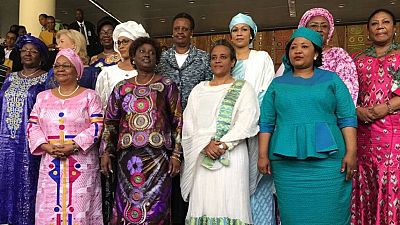
The role of the African First lady continues to be the subject of debate across the continent. Although not directly elected, they occupy offices attached to that of their husbands. The office of the First Lady is one that resonates across Africa.
These women are the president’s better half, ‘mothers of the nation’ – they are often called. Rightly so, because they complete the ‘father of the nation’ – the man chosen by majority of the voter population to steer the affairs of state.
Some are visible and powerful (politically), others are controversial. Some you hardly ever see but on campaign platforms, others go about their humanitarian activities. In the case of Uganda, the first lady is a cabinet minister.
As part of our review of the 2017 news year, we put the spotlight on the political presidential showing that First Ladies made, with emphasis on when their husbands were being sworn into office.
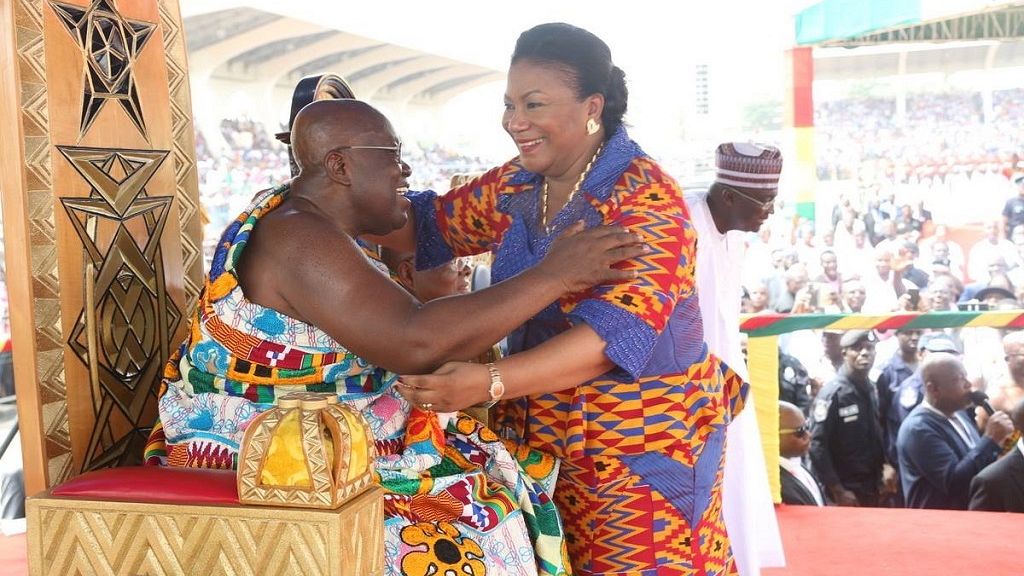
Ghana’s president Nana Addo Dankwa Akufo-Addo is hugged by his wife at the swearing in ceremony in Accra on January 7, 2017.
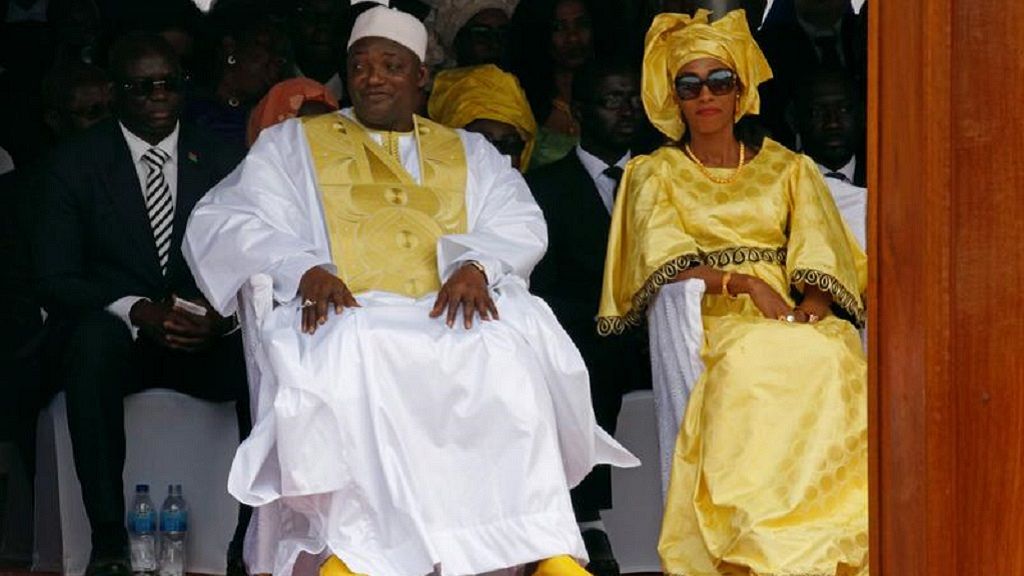
Gambia’s new President Adama Barrow is seen with his wife during his swearing-in ceremony at the Independence Stadium, in Bakau, Gambia February 18, 2017.
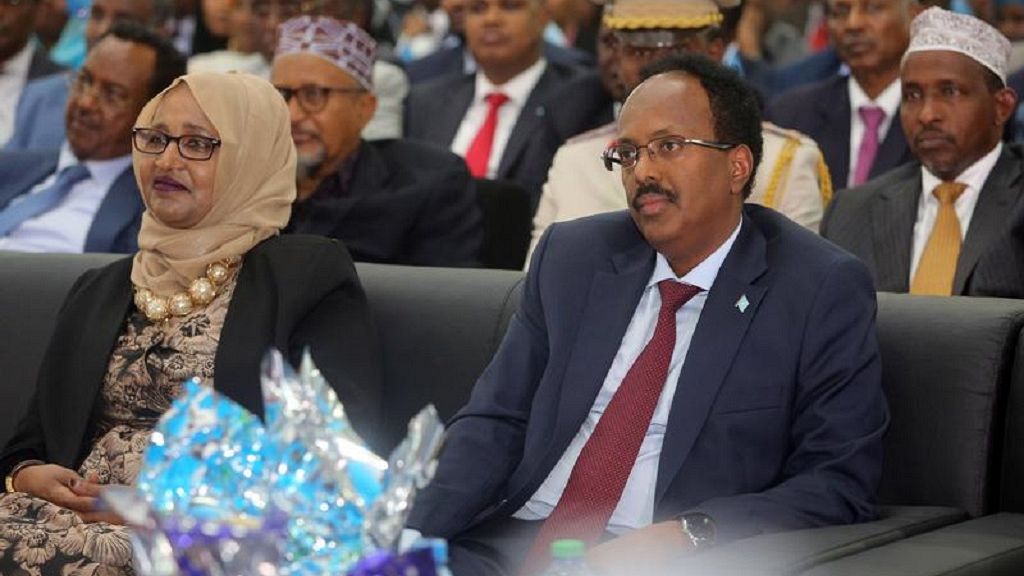
Somalia’s newly elected President Mohamed Abdullahi Farmaajo and his wife Zeinab Abdi listen to speeches during his inauguration ceremony in Somalia’s capital Mogadishu on February 22, 2017.
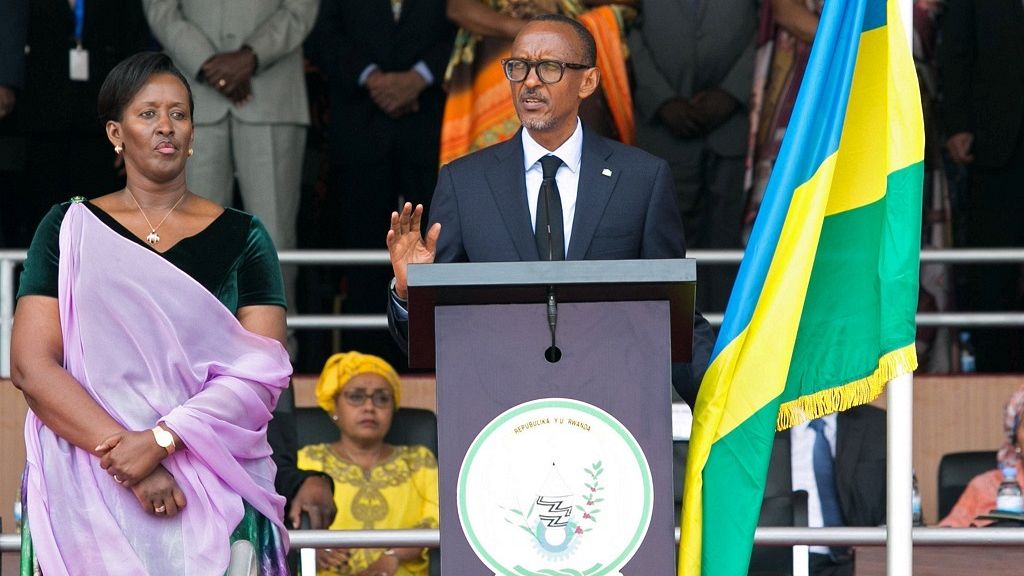
Rwanda’s President-elect Paul Kagame © takes the oath of office as his wife Jeannette and Rwanda’s Chief Justice Sam Rugege ® look on during his swearing-in ceremony at Amahoro stadium in Kigali, Rwanda, August 18, 2017
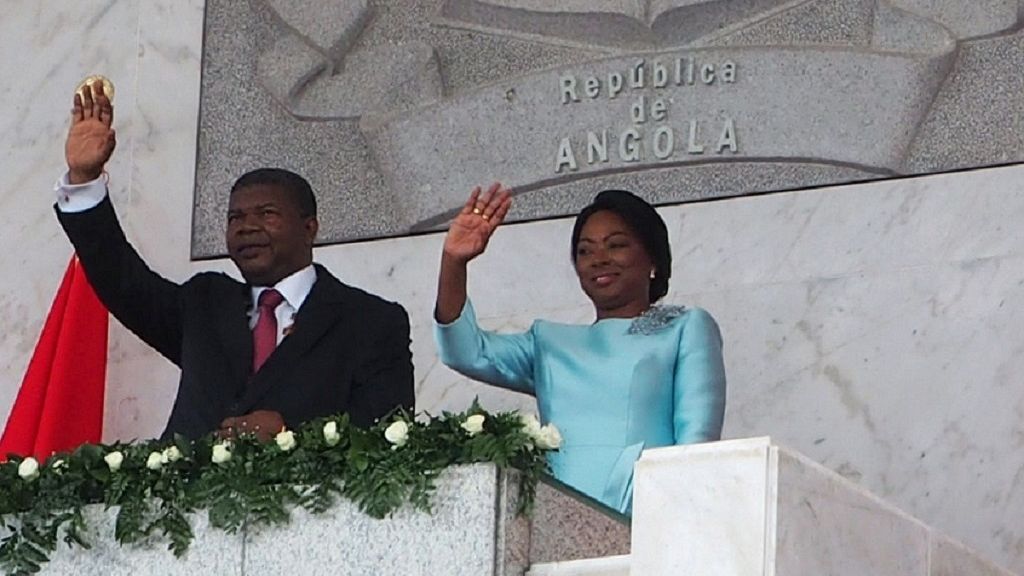
Angola’s new president Joao Lourenco waves after being sworn in as the country’s first new leader in 38 years in Luanda, Angola, September 26, 2017. 
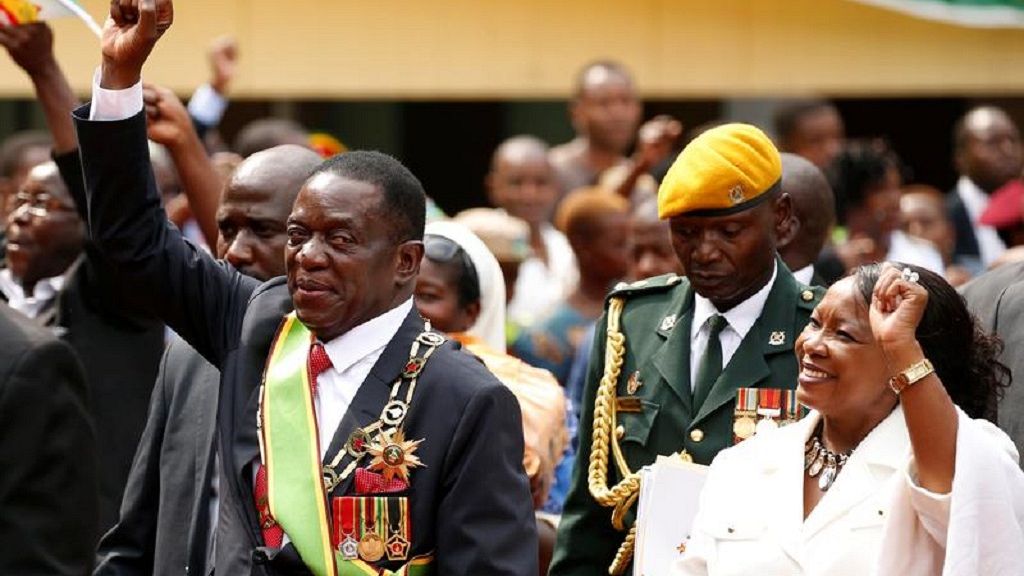
Zimbabwe’s new president Emmerson Mnangagwa and his wife Auxillia wave to their supporters as they leave after the swearing in ceremony in Harare, Zimbabwe, November 24, 2017.
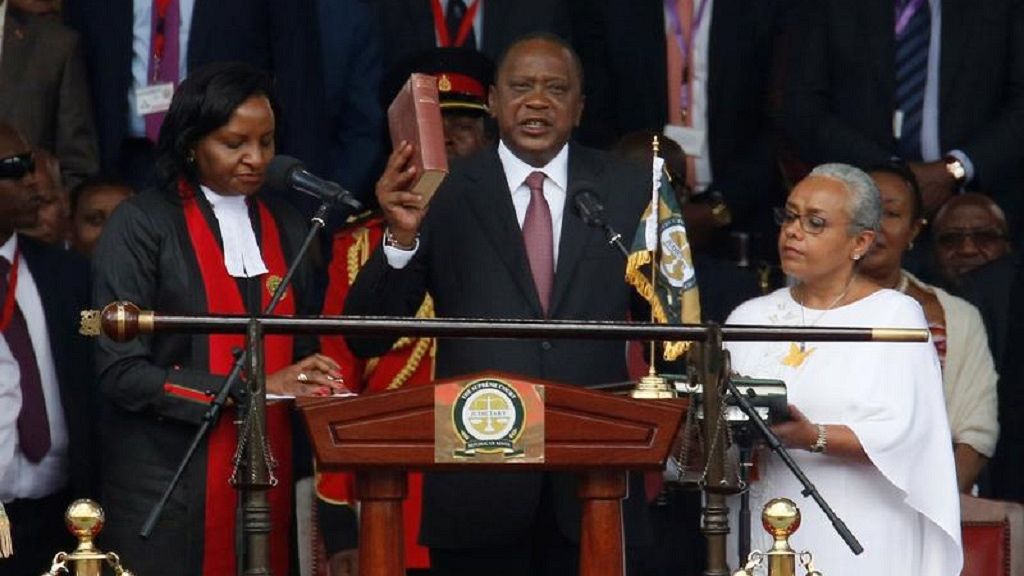
Kenya’s President Uhuru Kenyatta takes oath of office during inauguration ceremony at Kasarani Stadium in Nairobi, Kenya November 28, 2017.
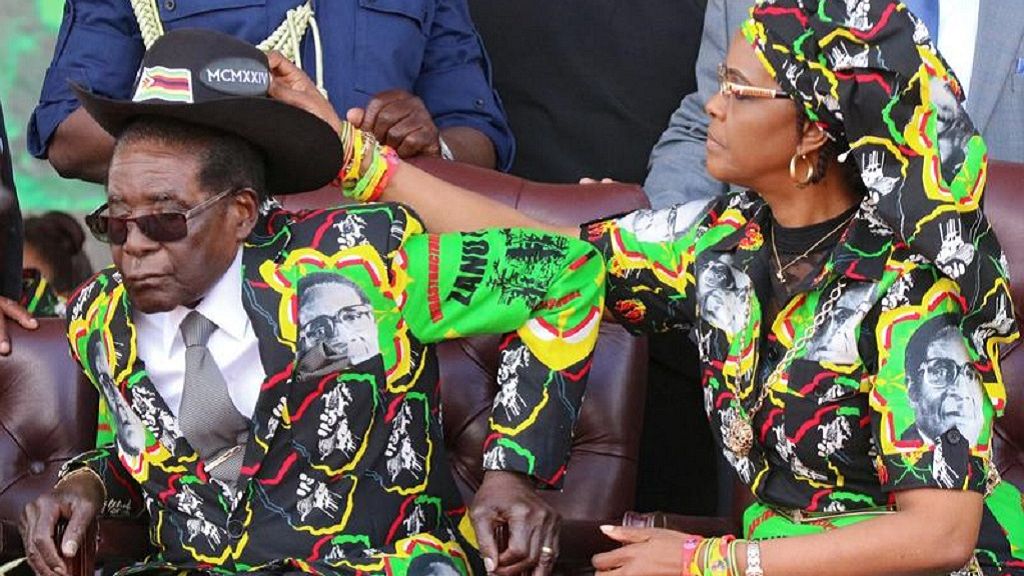
Up until November 21, 2017 photos of former Zimbabwean leader Robert Mugabe and his wife Grace at public functions were very popular.

Follow our 2017 Review page for more information

Zimbabwe's army ends operation restore legacy [The Morning Call]

19.12.17 / No Comments

Zimbabwe's army ends operation restore legacy [The Morning Call]


Zimbabwe's army ends operation restore legacy [The Morning Call]
Sibanda said the operation in an address on Monday said the operation had, to a large extent, achieved its goals. He urged Zimbabweans to support the police.

Zimbabwe military leader Chiwenga set to join politics

/ No Comments


Zimbabwe military leader Chiwenga set to join politics


The head of Zimbabwe’s military, who led the de facto coup that ended Robert Mugabe’s 37-year rule last month, General Constantino Chiwenga, is set to retire, according to a government statement released on Monday.
The retirement is seen by many as a move to prepare for the general’s widely anticipated appointment as vice president.
“Commander General Constantino Guvheya Dominic Nyikadzino Chiwenga has retired pending redeployment.’‘ read the statement released by Chief Secretary to the President and Cabinet.
Commander General Constantino Guvheya Dominic Nyikadzino Chiwenga has retired pending redeployment
General Chiwenga has been replaced by Lieutenant General Philip Valerio Sibanda, who announced the official end of the operation that ousted Mugabe yesterday.
“Lieutenant General Phillip Valerio Sibanda has been promoted to the rank of a full General and assumes the post of Commander Defence Forces (CDF). Before this latest promotion and appointment, he was Commander, Zimbabwe National Army (ZNA)’‘
The government also announced the retirement of police chief Augustine Chihuri, a deeply unpopular Mugabe loyalist who it said has been on leave since Dec. 15. Chihuri was accused by rights groups of presiding over vicious crackdowns on dissent and popular protest in the 18 months before Mugabe’s ouster.
The appointment of Chiwenga as Vice President would continue to reflect what analysts have described as the military consolidating its political power.
Since he was sworn in November 24, Mnangangwa has appointed the following military related appointments.
Major General Edzai Chimonyo, Zimbabwe’s ambassador to Tanzania.
General Sibusiso Moyo, appointed foreign minister.
Air Mashal Perence Shiri, appointed minister of agriculture and land affairs.
Major General Engelbert Rugeje, appointed political commissar in the ruling ZANU-PF party.
Mnangagwa is championing reform as he restructures government in Zimbabwe to woo back investors and cause the lifting of ‘crippling sanctions’ by the West.

Voting for next leader begins in South Africa's ANC conference [The Morning Call

18.12.17 / No Comments


Voting for next leader begins in South Africa's ANC conference [The Morning Call] video


South Africa’s ruling African National Congress has began voting this Monday for a new leader to replace President Jacob Zuma in a tight race between his former wife and
veteran minister Nkoszana Dlamini-Zuma, and deputy president, Cyril Ramaphosa. The vote this Monday is taking place at the party’s national conference in Johannesburg
and follows a dispute over a decision to exclude almost a 10th of the over 5,000 delegates who the party ruled weren’t properly accredited. The vote originally scheduled for
Saturday was postponed though balloting had began.

HEART-BREAKING : Robert Mugabe letter To All Black People – You Will Appreciate Me More When I Am Gone

20.11.17 / No Comments


HEART-BREAKING : Robert Mugabe letter
To All Black People – You Will Appreciate
Me More When I Am Gone


Robert Mugabe to black Zimbabwe citizens – You
Will Appreciate Me More When I Am Gone
My fellow Zimbabweans, I am writing this letter and
hope that all of you will read it and share it.
My days on this earth are numbered, but I know that
once I am gone, you and your children will never
forget about me.
I want you to understand that the reason I have
stayed long in power, 36 years on, is because I want
to empower all of you my fellow black
Zimbabweans. No other president in the entire
continent of Africa has done what I have done for
you, but you continue to take me for granted.
Do you know that in the whole of Africa,
Zimbabweans are the only blacks who own their
land? We are the only blacks who own and run
means of production, we own our own companies,
our own land. That is the true meaning of
independence. Political and economic independence.
I have fought tooth and nail my entire political life to
ensure that all of you have both political and
economic independence. I don’t hate white people,
no, not at all. What I hate is their thinking that they
are better than us, that they can just come to our
country and take our resources and our land, and tell
us what to do. To that I say no.Today, I am happy
that almost all the land is in black hands.
It is up to you to use the education I gave you to
develop the land so it is productive so you can feed
yourself. One thing I am proud of is that I worked
hard to ensure our natural resources and our land
was given back to its rightful owners: you the black
people of Zimbabwe.
Go to other countries in Africa. Right here just
across he Limpopo, in South Africa, Mandela sold
out and gave all the land and economy to the whites.
The blacks in South Africa will be slaves to white
South Africans forever. As long as land is not in the
hands of its rightful owners, the Africans, the black
man will continue to suffer in his own land.
The real wealth is now in your hands, I wrestled it
away from the white people who came to steal it
from you. Yes, the world was angry at me and
punished the whole country with sanctions, but I
don’t care because I know I was doing the right
thing. I was empowering my people. You.
Take care of the land and the industries I have you.
I did my part, the ball is now in your court. Do your
part.
You will remember me and appreciate me for what I
have done for you when I am gone.
Your president and leader
Africa for Africans.
Robert Gabriel Mugabe
!
22 Jours des offres imbattables
Du 17 Novembre au 8 Decembre, profitez des meilleu
deals jusqu'à -70%!

Trump signs Russia sanctions bill

3.8.17 / No Comments


Trump signs Russia sanctions bill

President Donald Trump signed into law Wednesday morning legislation that levies new sanctions against Russia and restricts Trump’s own ability to ease sanctions in place against Moscow.
The bill is one of the first major pieces of legislation that was sent to Trump’s desk, and it represents a rebuke of the President by giving Congress new veto power to block him from removing Russia sanctions.
The White House announced the signing shortly after 11 a.m. ET, saying the bill includes « a number of clearly unconstitutional provisions » that « purport to displace the President’s exclusive constitutional authority to recognize foreign governments, including their territorial bounds. »
In a separate statement, Trump said he believed the bill to be « seriously flawed » but signed it anyway.

« Still, the bill remains seriously flawed — particularly because it encroaches on the executive branch’s authority to negotiate, » he said in the statement. « Congress could not even negotiate a health care bill after seven years of talking. By limiting the executive’s flexibility, this bill makes it harder for the United States to strike good deals for the American people, and will drive China, Russia, and North Korea much closer together. »
He ended the statement by saying: « I built a truly great company worth many billions of dollars. That is a big part of the reason I was elected. As President, I can make far better deals with foreign countries than Congress. »

Even before Trump signed the bill, the measure prompted Russian President Vladimir Putin to retaliate against the US over the new sanctions, which Congress levied over Russian interference in the 2016 US election, as well as Russia’s annexation of Crimea and aggression in Syria.
In addition to the new US sanctions on Russia, former President Barack Obama seized two Russian compounds in New York and Maryland in December in response to the election meddling. Russia responded by ordering the US to cut staff at its diplomatic mission by 755 employees, as well as seizing two US diplomatic properties.
The new sanctions bill hits Russia’s energy and defense sectors, and also includes fresh sanctions against Iran and North Korea.
The measure was signed into law after it passed with overwhelming margins in both the House and Senate — which made the threat of a presidential veto a non-starter — but it was not an easy road to Trump’s desk.

After the Senate passed the sanctions on Iran and Russia 98-2, the bill languished in the House for more than a month amid a series of procedural fights. Then the House added North Korean sanctions before passing the measure 419-3, effectively forcing the Senate to swallow the new sanctions in order to get the legislation over the finish line before Congress left for its August congressional recess.
The House and Senate struck a deal to make some changes to the bill at the urging of a host of US industries and European countries, but Congress did not consider making the change that the White House wanted: removing the congressional review on Russia sanctions from the bill.
White House officials lobbied to weaken the section giving Congress a veto on the easing of sanctions, and Secretary of State Rex Tillerson warned Congress the administration should have « flexibility » to negotiate with Russia and improve relations.


But key Republican and Democratic lawmakers said that weakening congressional review was not on the table when they were finalizing the legislation.
Senate Foreign Relations Chairman Bob Corker, who initially was hesitant to pass a Russia sanctions bill before he was a key driver to get it done in July, said he has spoken to the President about the review process to try to ease the White House’s concerns.
Corker said that Congress would only veto an attempt to lessen sanctions on Russia if the administration took an « egregious » step to try to remove sanctions.
« I’ve walked the President through the process of how congressional review works, » Corker said. « The administration — knowing that unless it’s way out of bounds — likely they have the flexibility to do what they need to do. »
Corker noted that Trump has refused to believe his intelligence leaders that Russia interfered with the election, and said that may have helped push Congress to get the bill done quickly.
« I do think that the lack of strong statements in that regard probably effected the outcome, » he said.

Source: cnn.com

Cameroun - Série: Qui sont les 11 nouveaux généraux de l’armée camerounaise ? (Fin)

3.7.17 / No Comments

Cameroun - Série: Qui sont les 11 nouveaux généraux de l’armée camerounaise ? (Fin)


Officiers de l'armée camerounaise Archives
Le Président de la République a promu onze officiers supérieurs dans les corps de la gendarmerie nationale, de l’armée de terre et de l’armée de l’air.
Ci-dessous les visages et le parcours des nouveaux officiers, compilé par Cameroon Tribune.
Toungue Elias: un homme de terrain
Ce fils de Foumban est un « vieux » routier du commandement territorial de la gendarmerie
Une anecdote pour illustrer la personnalité et le professionnalisme du nouveau général de brigade Toungue élias. Quelques minutes seulement avant la tombée du décret l’élevant à cette haute fonction, il était joint par C.T qui recoupait une information relative à un accident de la circulation survenu jeudi dernier au niveau de la falaise de Mbé. Celui qui officiait jusque-là comme commandant de la légion de gendarmeries (Colegion) de l’Adamaoua avoue humblement qu’il n’est pas encore au courant de l’accident, laisse entendre qu’il va recouper l’information et promet qu’il va rappeler une fois en possession des éléments. Deux minutes seulement après l’échange, le Colegion rappelle l’informateur, confirme qu’il y a effectivement eu un accident de la circulation au niveau de la falaise. Il donne tous les détails.

Ensuite, c’est lui qui va recevoir, dans la foulée, un flot ininterrompu de coups de fil. Ses interlocuteurs le félicitent pour sa brillante promotion. Né en 1962 à Yaoundé, Elias Toungue est diplômé de l’EMIA depuis 1986. Le nouveau commandant de la quatrième région de gendarmerie qui a son état-major à Maroua fait partie de la promotion « Rudolph Duala Manga Bell ». Ancien chef de service du Renseignement au SED, il a été tour à tour commandant en second de la légion de gendarmeries du Littoral, commandant de la légion du Sud, avant d’être muté à Ngaoundéré en 2013. Il est également passé par l’École de guerre de Yaoundé. Marié et père de cinq enfants, il est considéré comme un homme de terrain, toujours aux côtés de ses troupes.
Brigadier General Robinson Agha: Spirited People’s Soldier
Illustrious son of Menchum Division, North West Region emerges as a new generation soldier and fine mixer.

It is on virtually every lip in the North West region that Robinson Agha Ndong is a rare soldier. He is calm, soft spoken, gentle, friendly, efficient and solidly by the nation.
He graduated from the National Combined Military Academy (EMIA) in 1984 in the batch of Bravery and Perseverance.  He has since criss-crossed the national territory serving the fatherland in respective positions and roles. Among the lot, Brigadier General Robinson Agha has served as an Instructor in the Military training Center, before joining the Presidential Guards Corps.  His way up started when he later became the Commander of the 111th Combat Company in Ebolowa before moving forward to serve in the U.N Peace Keeping Mission in Cambodia in 1994. Back in Cameroon, he led Operations and Intelligence services at the 31st Battalion in Kousseri, Far North region and went on to be in charge of Operations as the Chief of Staff at the 21st Battalion in Buea.  He also serves at the 8th Military Sector in Bertoua, East region, the 3rd Military Sector in Garoua, North region and the 2nd Military region in Douala, Littoral region. He was commissioned Commander of the 22nd Motorized Infantry Brigade in Bamenda on March 14,2016, the position he held before becoming Brigadier General on June 29, 2017.

Assoualai Blama: le « remède » des preneurs d’otages
Ces derniers mois, le nouveau général de brigade s’est distingué par son investissement dans la lutte contre la grande criminalité dans l’Adamaoua.
«Le colonel est en brousse ».  Chaque fois qu’on demandait de ses nouvelles, c’est la réponse qui nous était servie par ses hommes. Dans le langage de l’armée, l’expression « le colonel est en brousse » signifie que le chef dirige une opération sensible dans la forêt.  Ces derniers mois, le colonel Assoualaï Blama n’a pas eu de repos dans son bureau situé à l’intérieur du CIFAN de Ngaoundéré. Avec la montée du phénomène de prise d’otages et d’enlèvement de bergers ou de leurs proches dans les villages de la région de l’Adamaoua, son unité, la 31e Brigade d’infanterie motorisée (BRIM), couvrant l’Adamaoua et le Nord est particulièrement sollicitée. C’est donc lui qui allait libérer, avec ses hommes, les otages. Ces actions d’éclat dans le traitement de la grande criminalité lui ont valu le surnom de « remède » des preneurs d’otages et des coupeurs de route.
Sorti de l’Emia en 1987, promotion « Martin Paul Samba », ce natif de Maga, département du Mayo-Danay, région de l’Extrême-Nord, est un militaire rompu à la tâche. Depuis sa sortie de l’École militaire inter armées (EMIA), il a été presque tout le temps sur terrain. Mais après sa formation à l’École de guerre de Yaoundé en 2012, celui qui fait partie du tout premier contingent du Bataillon d’intervention rapide (BIR), passe quelques mois dans les services centraux à l’état-major des armées où il a occupé le poste de chef de division du reste du monde. C’est de là qu’il part en 2014 pour la 31e BRIM de Ngaoundéré. L’officier supérieur va désormais servir à la 41e BRIM, Kousseri. Il est né en 1963

North Korea calls Trump a ‘psychopath’

22.6.17 / No Comments


North Korea calls Trump a ‘psychopath’

North Korea on Thursday called US President Donald Trump a « psychopath » as tensions soar following the death of American student Otto Warmbier, who was evacuated in a coma from North Korean detention last week.
Pyongyang’s official Rodong Sinmun newspaper said the US president was in a « tough situation » at home and claimed he was toying with the idea of a preemptive strike on North Korea to divert attention from a domestic political crisis.
« South Korea must realise that following psychopath Trump…will only lead to disaster, » an editorial carried by the paper said.
A series of atomic tests and missile launches since last year have ratcheted up tensions on the Korean peninsula, and Warmbier’s death has further strained relations between Pyongyang and Washington.
Trump slammed the « brutal regime » in Pyongyang, and said he was determined to « prevent such tragedies from befalling innocent people at the hands of regimes that do not respect the rule of law or basic human decency. »
His language was echoed by South Korean President Moon Jae-In, who said in an interview ahead of a White House visit next week that North Korea bears responsibility for the student’s death.
« I believe we must now have the perception that North Korea is an irrational regime, » Moon told CBS television’s « This Morning. »
Moon, a centre-left politician who was sworn in last month after a landslide election win, favours engagement with the North, rather than the hardline stance taken by his ousted conservative predecessor Park Geun-Hye.
Washington has also stepped up its muscle-flexing in the region, flying two B-1 bombers over the Korean peninsula Tuesday in a planned training mission with Japan and South Korea as its latest show of force.

«Si les élections sont libres transparentes, je vais gagner John Fru Ndi»SDF/Teche Nyamusa (candidat à la présidence du SDF)

20.6.17 / No Comments

«Si les élections sont libres transparentes, je vais gagner John Fru Ndi»SDF/Teche Nyamusa (candidat à la présidence du SDF)

Dans une interview accordée à La Nouvelle Expression (LNE) du 19 juin, Félix Teche Nyamusa, challenger déclaré de Ni John Fru Ndi qui vient de publier un ouvrage dans ce sens, se dit confiant quant à sa victoire à la présidence du parti.
Question : Vous estimez, dans votre livre que John Fru Ndi est fatigué. Que voulez-vous faire comprendre par-là ? Teche Nyamusa : Effectivement, je dis que Fru Ndi est déjà vieux. Non pas pour nier sa capacité à aller au champ, mais je parle de vieux en ce sens qu’il n’ait plus d’idée pour faire bouger les choses comme ailleurs sur le plan politique.
 Quand Fru Ndi lançait le SDF, j’étais étudiant au Nigeria (Amadou Bello University) et immédiatement j’ai accepté le SDF. Après mes études, je suis retourné au Cameroun où j’ai occupé plusieurs postes au niveau de la base du parti, de la cellule jusqu’à la région. Donc je pense que quand on commençait, John Fru Ndi était vraiment vivant et fort sur le plan des idées. Avec John Fru Ndi, on ne peut pas vaincre, parce que la raison de former un parti politique c’est de prendre le pouvoir, comme nous le voyons ailleurs ? je peux prendre l’exemple du Burkina Faso, du Nigeria et bien d’autres. Question : Vous affirmez également que Fru Ndi soutient le « gangstérisme » de Paul Biya. Pourquoi ? Teche Nyamusa : Je peux vous dire que je n’approuve pas le fait qu’on aille toujours aux élections avec les verrous érigés par le pouvoir en place et qui ont fait le verdict de ces élections soit connu d’avance. Pour moi, comme pour plusieurs autres Camerounais, ELECAM est un organe qui est là pour travailler afin d’assurer les victoires du RDPC. Fru Ndi devrait fermement contester ELECAM et refuser d’aller aux élections avec cet organe. Et que si ça continue, on résiste tel que le prévoit la loi fondamentale du Cameroun. On a vu au Burkina Faso et même au Nigeria où Buhari (Muhammadu Nldr) a dit qu’il ne va pas accepter le truquage des élections et on est arrivé à l’alternance. Mais ici, cette résistance est de la responsabilité du SDF. Question : Pourquoi pensez-vous que l’honorable Mbah Ndam est l’une des personnes qui font que le SDF n’avance pas ? Teche Nyamusa : Il a parlé à la presse un jour pour dire qu’il ne voit pas le SDF bouger, grandir sans John Fru Ndi. Pour moi, c’est une aberration.  John Fru Ndi n’est qu’une personne. Et nul ne saurait être indispensable. Si une personne n’est pas là, les autres peuvent continuer le combat. Question : Etes-vous soutenu dans votre combat ? Teche Nyamusa : Je suis précisément soutenu par les militants, je n’ai pas une personnalité connue derrière moi ; juste des militants. Même Fru Ndi n’a qu’une voix pour voter. Quand je présente mon idéologie, c’est pour bénéficier du soutien des militants. Question : Certains peuvent estimer que vous êtes manipulé. Que leur répondez-vous ? Teche Nyamusa : Je ne suis pas manipulé. J’ai intégré le parti de mon propre gré, j’ai accepté le parti, donc j’exprime librement ce que je pense. Ceux qui disent que je suis manipulé, on va voir aux élections. Si c’est libre, je vais gagner John Fru Ndi. Je pèse bien mes mots parce que je suis à la base, un journaliste. Si ceux qui soutiennent Fru Ndi pensent que je suis manipulé, ils peuvent porter cela comme leur argument de campagne et la fin nous dira. Je pense qu’il y a beaucoup de personnes qui pensent comme moi, mais elles ont peur. Question : Qu’allez-vous faire si John Fru Ndi, au lieu de se présenter, décide de soutenir un autre candidat à l’instar de Joshua Osih ? Teche Nyamusa : S’il soutient un autre candidat, nous irons au scrutin et les électeurs choisiront le meilleur. Mon désir de prendre la présidence du SDF n’est pas obsessionnel. Je veux que le SDF ait un vrai candidat à la prochaine présidentielle. Je n’ai aucun doute que si les élections à la convention nationale sont transparentes, je vais gagner sur la base de mon idéologie. Pour l’instant, je mène le premier combat dans le SDF, quand je finis, je vais attaquer le RDPC au pouvoir.

Burkina/procès du gouvernement Compaoré: la Haute cour sursoit à statuer

17.6.17 / No Comments

Burkina/procès du gouvernement Compaoré: la Haute cour sursoit à statuer


Ouagadougou (AFP) – La Haute cour de justice du Burkina Faso, qui juge 34 ministres du dernier gouvernement de Blaise Compaoré pour leur implication présumée dans la répression de l’insurrection populaire d’octobre 2014, a décidé de « surseoir à statuer » en attendant la correction de ses textes.

Ce procès, qui s’est ouvert fin avril, implique également l’ex-président Blaise Compaoré, poursuivi en tant que ministre de la Défense, poste qu’il occupait cumulativement avec ses fonctions de chef d’Etat avant d’être renversé par la rue.
A la suite d’une requête en inconstitutionnalité déposée par des avocats de la défense, ce procès avait été suspendu.
Dans une décision en date du 9 juin, le Conseil Constitutionnel burkinabé avait jugé « contraire à la Constitution » l’absence de recours possible sur les décisions de la Haute cour de Justice.
« Cette décision s’impose donc à la Haute Cour de Justice qui doit surseoir à statuer en attendant le toilettage des textes incriminés », a indiqué le procureur général près la Haute cour de justice Armand Ouédraogo, dans un communiqué lu à la télévision publique.
« La reprise du procès des ex-membres du gouvernement Luc Adolphe Tiao (dernier Premier ministre de Compaoré) ne pourra intervenir qu’après correction des textes et fera l’objet de nouvelles citations tant des accusés que des témoins », a-t-il précisé.
Créée en 1995 sous le régime de Blaise Compaoré, dont elle s’apprête à juger le dernier gouvernement, la Haute cour de justice, restée inactive jusque-là, se réunissait pour la première fois de son histoire depuis sa réactivation en avril 2015.
Elle est la seule juridiction habilitée à juger le chef de l’Etat et des ministres pour des faits commis dans l’exercice de leurs fonctions.
Les 34 ministres du dernier gouvernement Compaoré sont poursuivis pour « complicité d’homicide volontaire et blessures volontaires » pour avoir participé « au Conseil extraordinaire des ministres du 29 octobre 2014 au cours duquel ils ont décidé de (faire appel à) l’armée pour réprimer les manifestants » contre la modification de la Constitution qui devait permettre à Compaoré de briguer un nouveau mandat.
Le président de la Haute cour de Justice Mathieu Ouedraogole 27 avril 2017 à Ouagadougou
L’ex Premier ministre Burkinabé Luc Adolphe Tiao devant la Haute Cour de Justice à Ouagadougou le 27 avril 2017